The AI-Assisted Future of Discrete Trials Therapy in RFT
Discrete Trials Therapy (DTT) is an essential cornerstone of Applied Behavior Analysis (ABA) interventions. Its structured, step-by-step approach allows therapists to target specific skills in a controlled environment. While effective, a criticism frequently leveled at DTT is its potential to produce “robotic” responses, in part due to the standardized nature of its stimuli and prompts.…
Read MoreAnnual Cooper Conference 2023: Interpersonal Neuroscience: Communication Across the Lifespan
The University of Colorado Anschutz Medical Campus is pleased to extend an invitation to the upcoming 2023 Annual Cooper Conference, Interpersonal Neurology: Communication Disorders Across the Lifespan. This seminal event hosted by the Departments of Psychiatry and Neurology will delve into the intricacies of communication disorders, discussing their neurobiological underpinnings and clinical manifestations throughout various…
Read MoreWorld FTD Awareness Week 2023
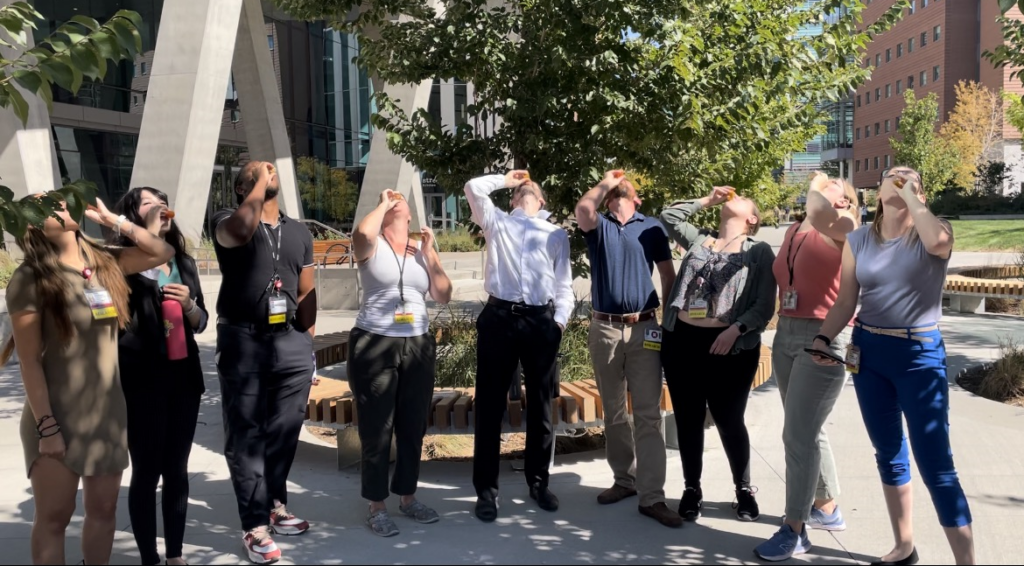
September 24 – October 1, 2023 As we embark on Frontotemporal Dementia Awareness Week, it’s crucial to shed light on this complex condition and understand why this week of awareness is so vital. Frontotemporal dementia (FTD) is not a single disease but rather an umbrella term for a group of rare brain disorders that primarily…
Read MoreBringing It Together or Breaking It Down– Thoughts on Holophrastic Communication
Quick! In one minute, how many ways can you imagine saying “Hello”? Now, in another minute, ponder over the various meaningful gestures you use daily without giving them a second thought. While most of us navigate the world of verbal and non-verbal communication with ease, it becomes evident that our interactions are composed of a…
Read MoreIntroducing CHRIS: Empowering Patients and Clinicians in a New Digital Era in Alzheimer’s and Dementia Care
In recent years, dementia has emerged as a growing healthcare crisis, impacting millions of individuals and their families worldwide. As the prevalence of neurocognitive disorders like Alzheimer’s disease continues to rise, there is an urgent need for innovative solutions to improve dementia screening, care management, and research. At the forefront of this battle, the University…
Read More